2025 marked the fourth run of The State of Steatotic (Fatty) Liver Care in America survey. This initiative surveys the real-life experiences of adults with Steatotic Liver Disease (SLD) across the United States, promoting the ongoing development and implementation of practical solutions to improve diagnosis, treatment, care, and support for those affected by these conditions.
Key Findings
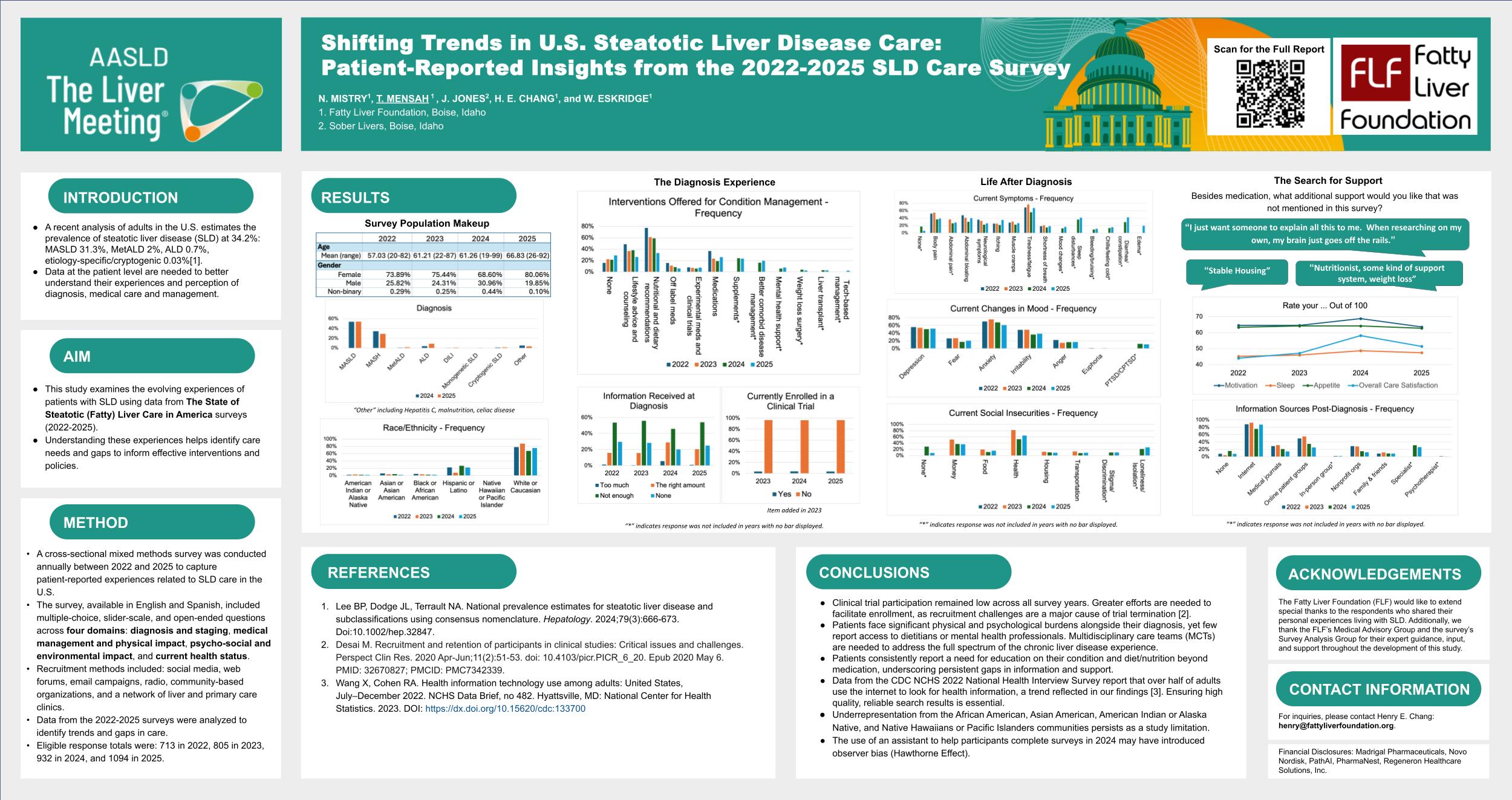
- Many respondents were diagnosed with either MASLD or advanced-stage MASH (cirrhosis), suggesting major gaps in early detection and disease monitoring. Routine screening and noninvasive assessments could help identify disease sooner.
- Most respondents’ diagnosis journeys began with their primary care provider, either during a routine visit or after reporting symptoms. Others discovered their condition incidentally while being examined for unrelated issues.
- Blood tests such as liver function tests, FIB-4, and ELF, along with imaging tools like ultrasound and FibroScan, were most commonly used to confirm diagnosis. Liver biopsy remains in use but far less frequently.
- At diagnosis, most were advised to improve their diet, lose weight, or see a specialist. While many saw a hepatologist or gastroenterologist within three months, about one in five were never referred. Most felt they received little to no information at diagnosis, though recent responses suggest improvement.
- Dietary and lifestyle advice were the most common forms of support, often paired with management of other conditions. Few respondents were offered mental health resources, despite reports of anxiety, depression, and irritability. Many said they weren’t offered any specific help to manage their disease.
Beyond the Report
Insights and Support from the Steatotic Liver Disease (SLD) Community
Steatotic Liver Foundation CMO, Dr. Neeraj Mistry, and Patient Engagement Manager, Tiffany Mensah discuss emerging trends in the Foundation's annual patient survey, The State of Steatotic (Fatty) Liver Care in America, now with its 4th year of survey data. The pair also highlight a number of resources to address needs highlighted by the steatotic liver disease (SLD) patient community.
Conclusiones Clave
- Muchos encuestados fueron diagnosticados con MASLD o MASH en etapa avanzada (cirrosis), lo que sugiere importantes deficiencias en la detección temprana y el seguimiento de la enfermedad. Las pruebas de detección rutinarias y las evaluaciones no invasivas podrían ayudar a identificar la enfermedad antes.
- La mayoría de los encuestados comenzaron su proceso de diagnóstico con su médico de cabecera, ya sea durante una visita de rutina o tras reportar síntomas. Otros descubrieron su afección accidentalmente al ser examinados por problemas no relacionados.
- Los análisis de sangre, como las pruebas de función hepática, FIB-4 y ELF, junto con herramientas de diagnóstico por imagen como la ecografía y FibroScan, fueron los más utilizados para confirmar el diagnóstico. La biopsia hepática sigue utilizándose, pero con mucha menos frecuencia.
- Al momento del diagnóstico, a la mayoría se les recomendó mejorar su dieta, bajar de peso o consultar a un especialista. Si bien muchos consultaron con un hepatólogo o gastroenterólogo en un plazo de tres meses, aproximadamente uno de cada cinco nunca fue derivado. La mayoría consideró haber recibido poca o ninguna información al momento del diagnóstico, aunque las respuestas recientes sugieren una mejoría.
- Los consejos dietéticos y de estilo de vida fueron las formas de apoyo más comunes, a menudo combinados con el manejo de otras afecciones. A pocos encuestados se les ofrecieron recursos de salud mental, a pesar de reportar ansiedad, depresión e irritabilidad. Muchos afirmaron que no se les ofreció ayuda específica para controlar su enfermedad.