2023 marked the second-year run of The State of NAFLD/NASH Care in America, a pioneering national initiative that aims to make a significant impact within the NAFLD/NASH patient community. This initiative surveys the real-life experiences of adults with NAFLD/NASH across the United States, promoting the ongoing development and implementation of practical solutions to improve diagnosis, treatment, care, and support for those affected by these conditions.
Key Findings
- Primary care remains a common entry point for NAFLD/NASH patients in their diagnosis experience.
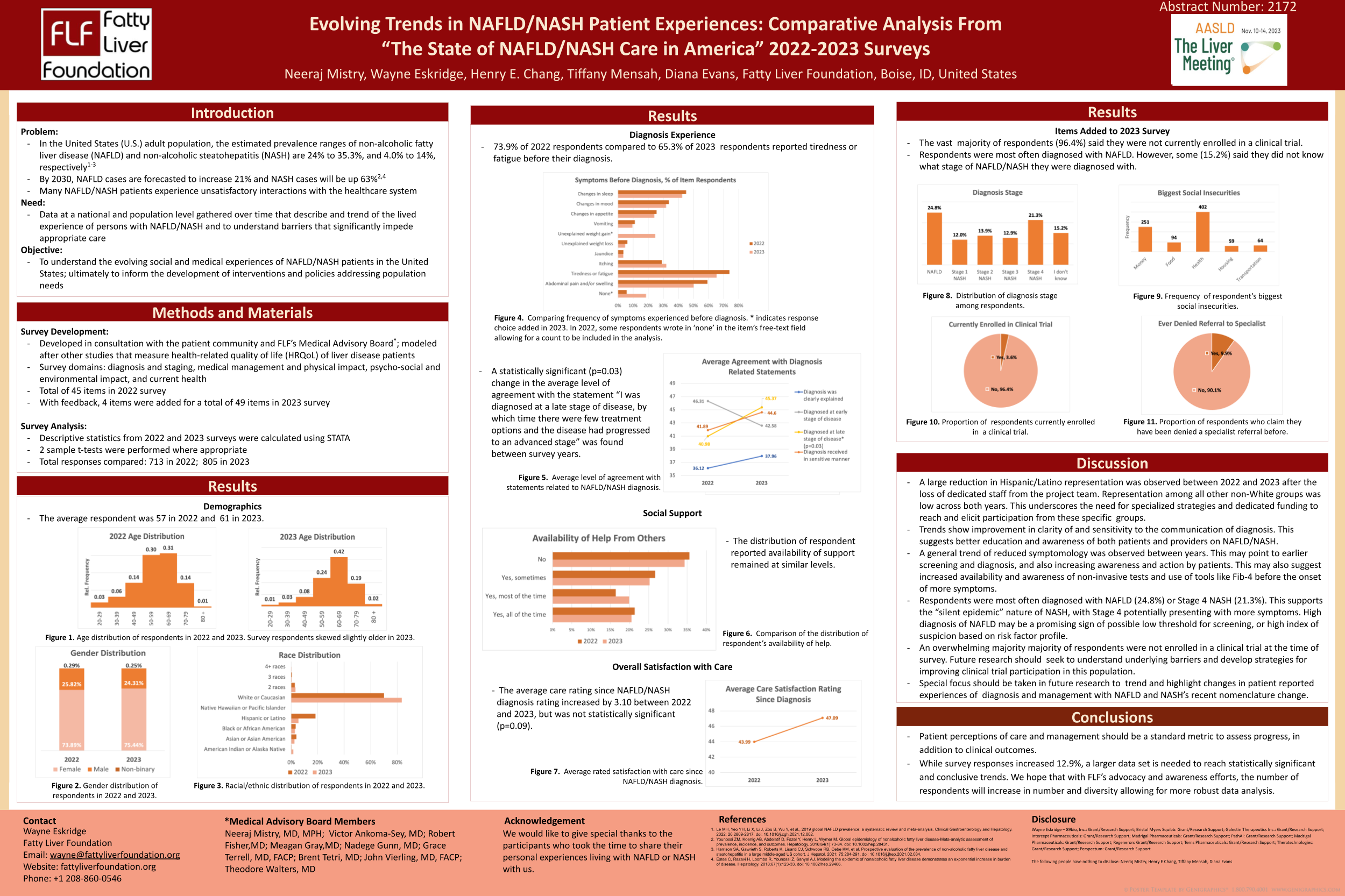
- Tiredness, abdominal pain and/or swelling, and changes in sleep remained the most common symptoms before diagnosis, though their reported frequencies decreased slightly in 2023.
- Most respondents were diagnosed with either NAFLD (24.8%) or Stage 4 NASH (21.3%). Some respondents (15.2%) were not aware of their exact disease stage at diagnosis.
- Among 2023 respondents, slightly more (0.6%) were given more tests to establish a cause of their diagnosis. Less (4.6%) reported they were told there was nothing to worry about.
- Three out of four (83.0% in 2022 and 83.9% in 2023) respondents felt they were given none or not enough information at diagnosis.
- A new question in 2023, about one out of ten (9.9%) respondents reported having been denied a referral to a specialist before.
- A new question in 2023, over nine out of ten (96.4%) said they were not currently enrolled in a clinical trial.
- About one out of three (35.6% in 2022 and 34.3% in 2023) still did not have someone to turn to if help was needed or wanted.
- Health (82.0%) was the most frequently reported social insecurity followed by money (51.2%) and food (19.2%).
- The average rating of medical care since diagnosis improved about 3 points (44 to 47) between 2022 and 2023.
- Tiredness, body pain, and abdominal bloating remain the most frequently experienced symptoms among respondents at the time of survey.
- Reported feelings of anxiety, irritability, and fearfulness increased between 2022 and 2023.
Beyond the Report
Conclusiones Clave
- Cansancio, dolor abdominal y/o inflamación, los cambios en el sueño fueron todavia los síntomas más comunes antes del diagnóstico. Sin embargo, su frecuencia disminuido un poco en 2023.
- La mayoría fueron diagnosticado con EHGNA (24.8%) o EHNA en etapa 4 (21.3%). Algunos participantes (15.2%) no sabían en qué etapa de la enfermedad fueron diagnosticado.
- En 2023, los participantes un poco mas del (0.6%) recibieron nuevos estudios para establecer la causa de su diagnóstico. Menos (4.6%) se les dijo que no tenían nada de qué preocuparse.
- Tres de cada cuatro (83.0% en 2022 y 83.9% en 2023) sintieron que no recibieron suficiente o ninguna información en el momento del diagnostico.
- Aproximadamente uno de cada diez (9.9%) informaron que alguna vez le han negado una referencia a una especialista. Esta pregunta es nueva en 2023.
- Nueve de cada diez participantes(96.4%) informaron que no estan participando actualmente en algún ensayo clínico. Esta pregunta es nueva en 2023.
- Aproximadamente uno de cada tres (35.6% en 2022 y 34.3% en 2023) todavia no tenían a alguien a quien acudir en busca de ayuda si la necesitaban.
- La salud (82.0%) era la mayor inseguridad social seguida del dinero (51.2%) y la comida (19.2%).
- De 2022 a 2023, el promedio del cuidado médico desde el diagnóstico mejoró aproximadamente 3 puntos (de 44 a 47).
- Los participantes todavia se enfrentan a diferentes síntomas, como cansancio, dolor corporal, y inflamación abdominal.
- La ansiedad, depresión, y irritabilidad aumentó de 2022 a 2023.