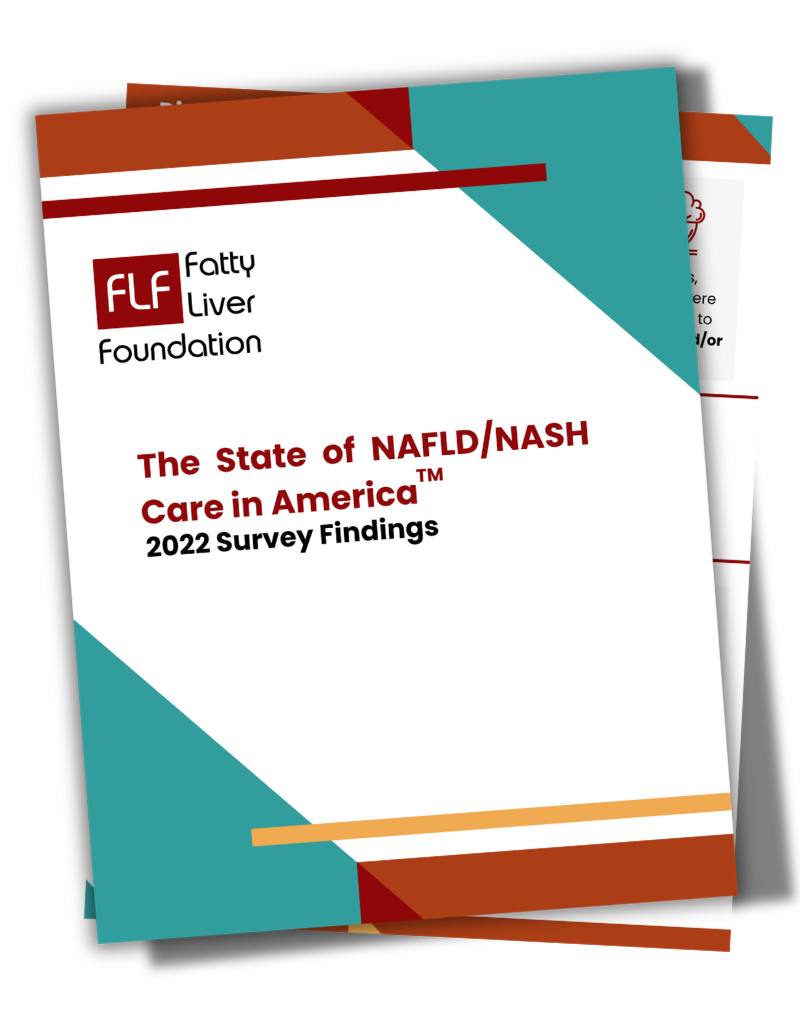
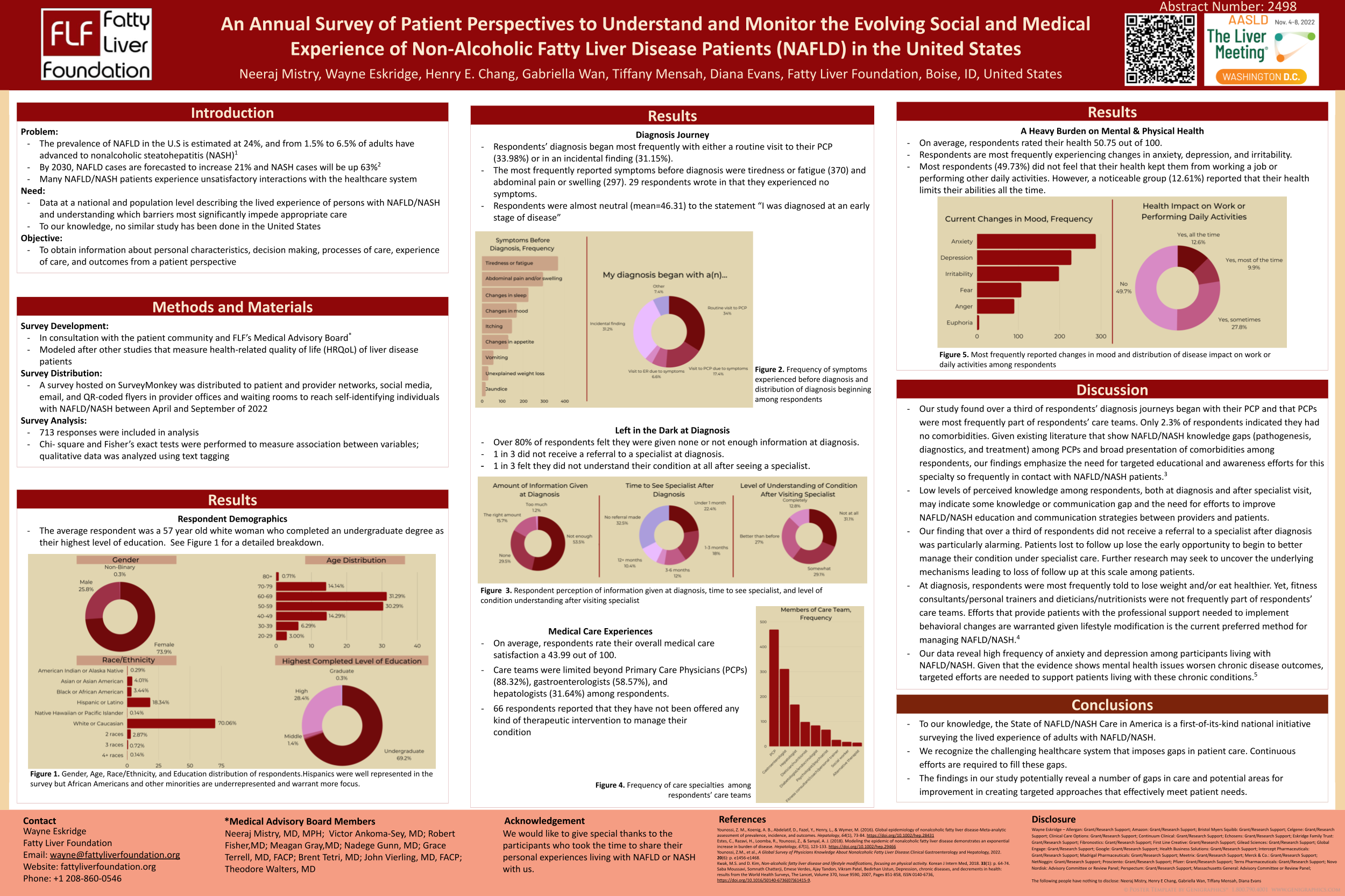
In April 2022, the Steatotic Liver Foundation (SLF) launched the inaugural run of The State of NAFLD/NASH Care in America, an annual national survey of patients with NAFLD/NASH. The goal was to better understand the experiences of patients with NAFLD/NASH, their risk factors for NAFLD/NASH, their diagnosis and how it was communicated to them, the care they received, and whether they felt their disease and care were clearly explained to them.
The results of the survey (a total of 713 respondents) provide a unique perspective on the experiences of NAFLD/NASH patients and can help inform better support services and advocacy efforts for those living with NAFLD/NASH. SLF plans to use the survey findings to raise awareness of NAFLD/NASH and campaign for better support for patients with healthcare professionals, researchers, policy makers, media, and other key stakeholders.
Implications and Needs
- Improved comprehensive, multidisciplinary care teams to treat NAFLD/NASH and comorbidities for patients
- Improved support for emotional well-being for patients
- Improved strategies for building strong social support networks for patients
- Improved home-based care and care navigation resources for partners and other caregivers of people living with NAFLD/NASH
- Improved early identification strategies for at risk individuals for providers
- Improved NAFLD/NASH education among primary care and specialty providers
- Reduced barriers to create comprehensive, multidisciplinary care teams to treat NAFLD/NASH and comorbidities in patients
Beyond the Report
Implicaciones y Necesidades
- Equipos de atención integrales y multidisciplinarios mejorados para tratar EHGNA/EHNA y sus comorbilidades para los pacientes
- Mejor apoyo para el bienestar emocional para los pacientes
- Estrategias mejoradas para construir sólidas redes de apoyo social para los pacientes
- Recursos mejorados de atención domiciliaria y navegación de atención para familiares y/o cuidadores de personas que viven con EHGNA/EHNA
- Mejores estrategias de identificación temprana para personas en riesgo para los proveedores de salud
- Mejorar la educación sobre EHGNA/EHNA entre proveedores de atención primaria y especialistas
- Implementación de equipos de atención integrales y multidisciplinarios para tratar EHGNA/EHNA y sus comorbilidades